

The History of the Paralympic Games and Intellectual Disability Sport: A Shared Journey Towards Inclusion
A dream born from resilience
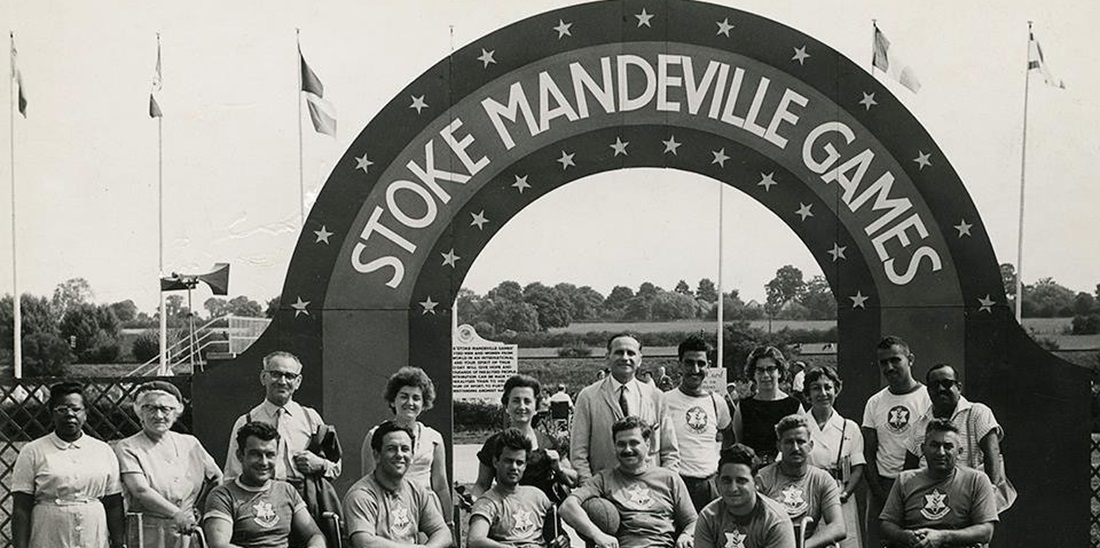
The history of the Paralympic Games began in 1948 in Stoke Mandeville, England. Neurosurgeon Sir Ludwig Guttmann organised sporting competitions for war veterans with spinal cord injuries.
His vision was both simple and revolutionary: sport could be a powerful tool for rehabilitation, dignity and social recognition.
Twelve years later, in 1960, the first official Paralympic Games were held in Rome, bringing together 400 athletes from 23 countries. Since then, the event has grown continuously, becoming a global sporting celebration that brings together thousands of athletes with disabilities from around the world.
The emergence of Intellectual Disability Sport: a different history, the same fight
At the same time, during the 1960s and 1970s, another movement emerged: Intellectual Disability Sport, created for people with intellectual disabilities, psychological disabilities and autism spectrum disorder (ASD).
In France, the French Federation for Adapted Sport (FFSA) was founded in 1971. Its mission was clear: to provide everyone with the opportunity to participate in sport according to their abilities, aspirations and pace of development.
The movement quickly expanded onto the international stage. In 1986, the International Sports Federation for Persons with Intellectual Disability (INAS), now known as Virtus, was established to organise and govern international competition.
In 2004, the Global Games were launched. Today, they are the world’s largest international sporting event dedicated to athletes in Intellectual Disability Sport.
Winter Paralympic Games: an unfinished story
Intellectual Disability Alpine Skiing was first included in the Winter Paralympic Games in Lillehammer in 1994, followed by Intellectual Disability Cross-Country Skiing in Nagano in 1998.
However, since then, no Intellectual Disability Sport events have been included in the Winter Paralympic programme.
By contrast, the Summer Paralympic movement reintroduced athletes with intellectual disabilities at the London 2012 Paralympic Games, allowing them once again to compete in athletics, swimming and table tennis.
This progress demonstrated that inclusion is possible when there is a collective commitment to making it happen.
A legacy that must continue
The Paris 2024 Paralympic Games left a lasting impression around the world. Outstanding organisation, inspiring performances and unprecedented media coverage helped showcase the extraordinary achievements of Paralympic athletes.
Yet a significant part of the disability sport movement remains absent from the Winter Paralympic stage.
The 2030 Winter Paralympic Games, which will be hosted in the French Alps, represent a historic opportunity to address this inequality and build upon the legacy of Paris 2024.
2030: an opportunity to make Paralympic history
This is the ambition of the Jeux 2030 Inclusifs statement, supported by more than 2,000 committed citizens, athletes, sports leaders and public figures in France and internationally.
The statement calls for a historic step forward: enabling high-performance athletes from Intellectual Disability Sport to finally take their place on the world’s greatest sporting stage.
The athletes exist.
The competition structures exist.
The international classification systems exist.
The talent, commitment and performances already exist.
What remains is the collective determination to make the Paralympic movement fully representative of all athletes it seeks to celebrate.
Together, we can ensure that the history of the Paralympic Games continues to be written in the plural — embracing every difference, every strength and every success.