
International Classifications in Intellectual Disability Sport: Understanding Categories II1, II2 and II3
Ensuring fair, meaningful and inclusive performance is at the heart of Intellectual Disability Sport. To make competition equitable for all athletes, international classifications recognised by Virtus — the global governing body for Intellectual Disability Sport — play a decisive role.
These classifications are not designed to label athletes. Their purpose is to guarantee that each competitor can express their full potential, without being advantaged or limited by the nature of their disability. This scientific and transparent system is the foundation of high-performance sport, just as in any Olympic or Paralympic discipline.
Why classification matters: fairness, integrity and recognition
In sport, fairness is non-negotiable. An autistic athlete does not have the same needs as an athlete with an intellectual disability, and even less so as an athlete with Down syndrome. Yet they all share the same passion, discipline and commitment.
Classification ensures that competitions match athletes with comparable functional profiles. It protects athletes, guarantees sporting justice and highlights excellence. For Virtus, this framework is essential to ensure meaningful competition outcomes at the international level.
Category II1: Athletes with intellectual disability
Category II1 includes athletes with intellectual disability, typically defined by an IQ below 75 and limitations in adaptive functioning, such as communication, daily living skills or social interaction.
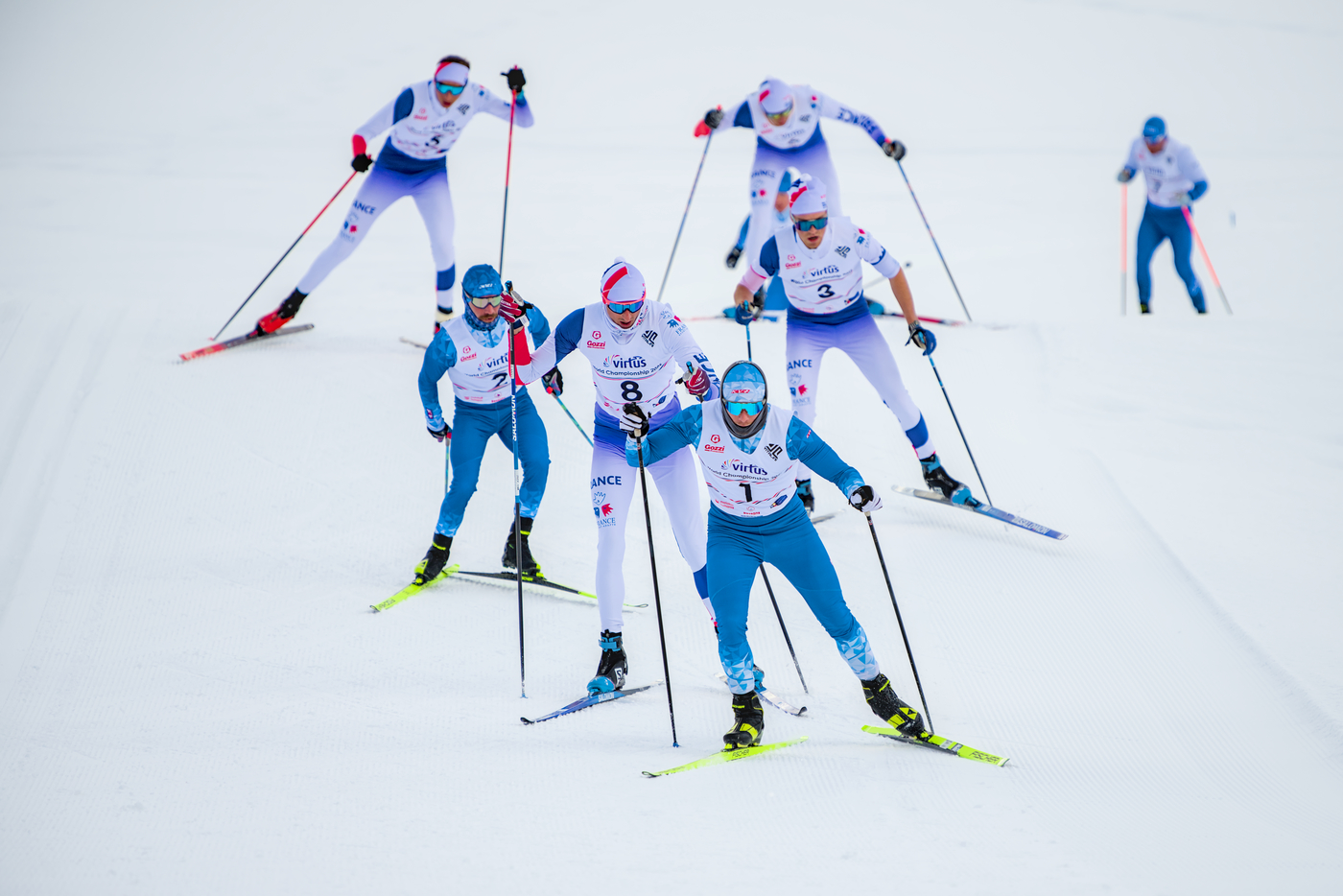
These athletes represent the largest proportion of international competitors in Intellectual Disability Sport. They excel in many disciplines — skiing, table tennis, athletics, swimming and more — proudly competing at Virtus World Championships and the Global Games.
Category II2: Intellectual disability with additional impairment
Category II2 includes athletes who have an intellectual disability combined with a significant additional impairment, such as Down syndrome. These athletes often face additional physical or sensory challenges affecting coordination, strength, speed or fatigue.
Despite these constraints, they are among the most determined and inspiring athletes in the movement. Their perseverance, commitment and exceptional effort demonstrate a level of excellence that remains under-recognised by the public.
Category II3: Autistic athletes without intellectual disability
A more recent addition to the international classification system is Category II3, for autistic athletes without intellectual disability.
Their perception of the world, communication style or sensory processing may differ — but their capacity to analyse, repeat technical movements and achieve high-level performance is remarkable. Their inclusion marks an important step toward more precise and fair recognition of cognitive diversity.
A rigorous and scientific assessment process
To compete internationally, every French athlete undergoes a strict eligibility process overseen by Virtus. This assessment includes medical evaluations, cognitive testing and sport-specific observation in real conditions.
This is not a simple administrative step — it is a guarantee of sporting integrity. It ensures that every performance is meaningful, every medal is earned and every competition is founded on indisputable fairness.
This rigour brings Intellectual Disability Sport closer than ever to Paralympic standards and demonstrates that the structures, rules and methodologies already exist — and they work.
The Paralympic limitation: a system still too narrow
Currently, only athletes with intellectual disability (Category II1) are eligible to compete in the Paralympic Games — and only in the Summer Games.
Athletes with Down syndrome (II2) and autistic athletes without intellectual disability (II3), despite being internationally evaluated and recognised by Virtus, remain excluded from the Paralympic programme. No Intellectual Disability Sport events are included in the Winter Games.
This exclusion does not reflect their sporting level, but the slow evolution of the system.
Yet everything is ready for change:
- the rules
- the classifications
- the testing protocols
- the coaching structures
- the high-performance centres
- the international competitions
- and entire generations of athletes ready for recognition.
2030: a historic opportunity to recognise all athletes
This is the purpose of the Jeux 2030 Inclusifs statement.
It argues that the 2030 Winter Paralympic Games — hosted in the French Alps — represent a historic opportunity to finally include all Virtus-classified athletes.
The athletes exist.
The structures exist.
The classification system exists.
Only one essential element is missing:
the willingness to open the world’s greatest sporting stage to athletes who have remained invisible for far too long.
Athletes in Intellectual Disability Sport are not asking for special treatment — only a fair place.
And 2030 can, at last, give it to them.