
Adapted Sport: A Sport for All, an Opportunity for Everyone
Adapted Sport is far more than a sporting activity. It is a powerful driver of personal growth, achievement and inclusion. It is designed for people with intellectual disability, psychological disability, or autism spectrum disorder (ASD), enabling them to take part in physical activity aligned with their abilities, interests and aspirations.
Recognised by the French Ministry of Sports, Adapted Sport is coordinated by the French Federation for Adapted Sport (FFSA), a member of the French Paralympic movement. Its mission is clear: to ensure that every person can experience sport as a space for empowerment, dignity and pride — from recreational participation to high performance.
The benefits of Adapted Sport
Adapted Sport is first and foremost a school of life. It contributes to physical and mental well-being, strengthens self-confidence, promotes autonomy and encourages social interaction. For many athletes, it represents a breath of fresh air — a moment of joy, sharing and emotional connection.
Beyond performance, Adapted Sport carries universal values: respect, solidarity, courage, excellence and self-improvement. It serves as a reminder that sport does not belong to a privileged few — it belongs to everyone.
Who is Adapted Sport for?
Adapted Sport is designed for three major profiles of disability, all recognised internationally:
- Intellectual disability (ID), affecting around 2% of the French population and impacting learning abilities, autonomy and daily adaptation.
- Psychological disability, which may cause relational, emotional or cognitive difficulties and affects nearly one third of the population at some point in life.
- Autism spectrum disorder (ASD), affecting approximately 700,000 people in France, with or without associated intellectual disability.
Adapted Sport takes these diverse realities into account and provides a tailored environment in which every athlete can progress at their own pace.
Where and how to practise Adapted Sport?
Adapted Sport is available across France through FFSA-affiliated clubs, medico-social institutions, schools, universities and local associations.
Activities are supervised by trained educators attentive to each athlete’s specific needs. More than 80 disciplines are available, including:
- Individual sports: athletics, swimming, skiing, table tennis, horse riding, and more.
- Team sports: football, basketball, rugby, handball…
- Outdoor and nature-based activities: sailing, hiking, mountain biking, climbing…
Everyone can find a discipline that suits them, progress at their own pace and enjoy a welcoming, motivating environment.
A high-performance movement recognised internationally
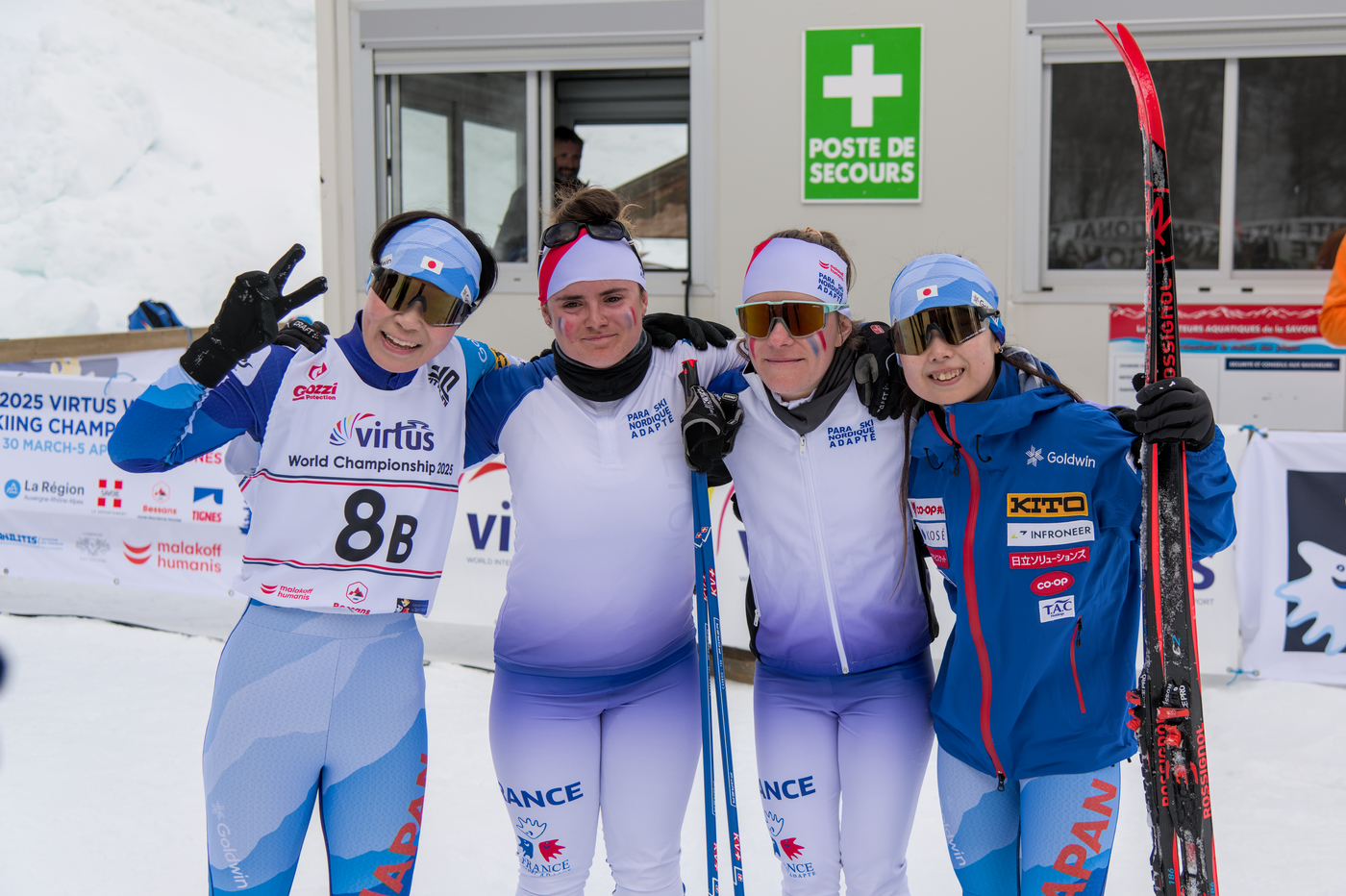
Adapted Sport also offers a true high-performance pathway. Many French athletes compete in the Global Games, Virtus World Championships and the European Adapted Sport Games, where France is among the world’s leading nations.
Athletes compete in three international Virtus categories:
- II1: intellectual disability
- II2: intellectual disability with additional impairment, such as Down syndrome
- II3: autism without intellectual disability
At the 2023 Global Games, France ranked first with 189 medals across all categories. Nine national training centres (Pôles France) prepare athletes for international events — including Paralympic competitions, although only II1 athletes are currently eligible.
Learn more about the international classification system and its three categories.
A shared ambition: recognising every athlete
Adapted Sport embodies a humanistic vision of sport — a world where everyone has a rightful place. It seeks not compassion, but recognition.
This is the purpose of the Jeux 2030 Inclusifs statement, signed by more than 2,500 supporters in France and abroad.
It calls for a historic step forward: to finally offer Adapted Sport athletes the opportunity to compete in the Winter Paralympic Games and to represent a society committed to true inclusion.