

A Year of Advocacy for the Return of Adapted Sports to the Winter Paralympic Games.
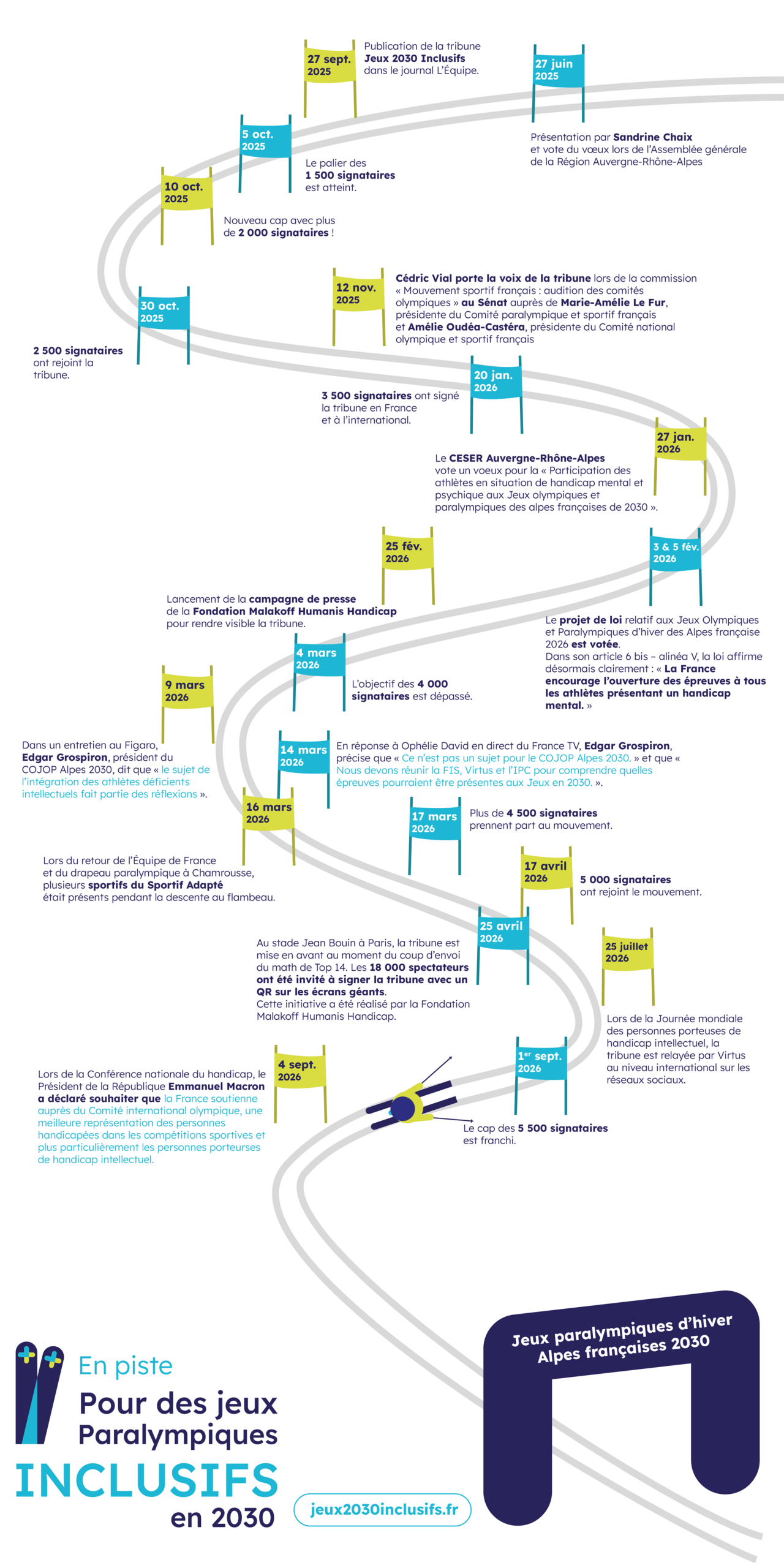
Launched on September 27, 2025, the “Inclusive 2030 Games” statement group is celebrating its first year of advocacy. Nearly 6,000 people have already signed a petition to support the return of Adapted Sports athletes to the 2030 Winter Paralympic Games in the French Alps. Over the past year, athletes, organizations, elected officials, members of the Paralympic movement, and citizens have all contributed to advancing this cause.
A year ago, a question was posed: Can the 2030 French Alps Winter Paralympic Games become a new milestone in the inclusion of athletes with neurodevelopmental disorders?
On September 27, 2025, Marc Truffaut, president of the French Adapted Sports Federation (FFSA), and Sandrine Chaix, vice president of the Auvergne-Rhône-Alpes Region in charge of disability issues, launched the op-ed titled “France, champion for Paralympic Inclusion! It’s up to us to write this chapter.”
With the support of Fabrice Pannekoucke, president of the Auvergne-Rhône-Alpes Region, and Marie-Amélie Le Fur, president of the French Paralympic and Sports Committee (CPSF), this campaign has had one goal for the past year: to enable Adapted Sports athletes to reclaim their place at the Paralympic Winter Games, specifically the 2030 edition to be held in the French Alps.
Nearly 6,000 Signatures for a Shared Goal
In twelve months, the “Inclusive 2030 Games” statement has gathered nearly 6,000 signatories in France and around the world.
Athletes, organizations, elected officials, members of the Paralympic movement, businesses, and citizens have joined this effort, gradually giving the issue an international dimension.
Because behind this initiative are, above all, athletes.
The campaign is notably led by top French athletes such as Thomas Girard and Mélanie De Bona in adapted para alpine skiing, Clément Richard and Clément Colomby in adapted para cross-country skiing, and Marie Graftiaux in adapted para swimming.
Over the months, international athletes have also joined the movement: Georgia Yuen, an Australian skier; Magdalena Sailerová, a Czech skier; and Haleigh Bates, an American skier and member of the first Virtus Athletes’ Council.
These stories have one thing in common: they demonstrate that Para athletes train, compete, and perform at the highest level—including on the same slopes used for international competitions.
Read their profiles here.
Competitions Already Held on the Slopes of the French Alps
One of the major achievements of this first year is also very tangible.
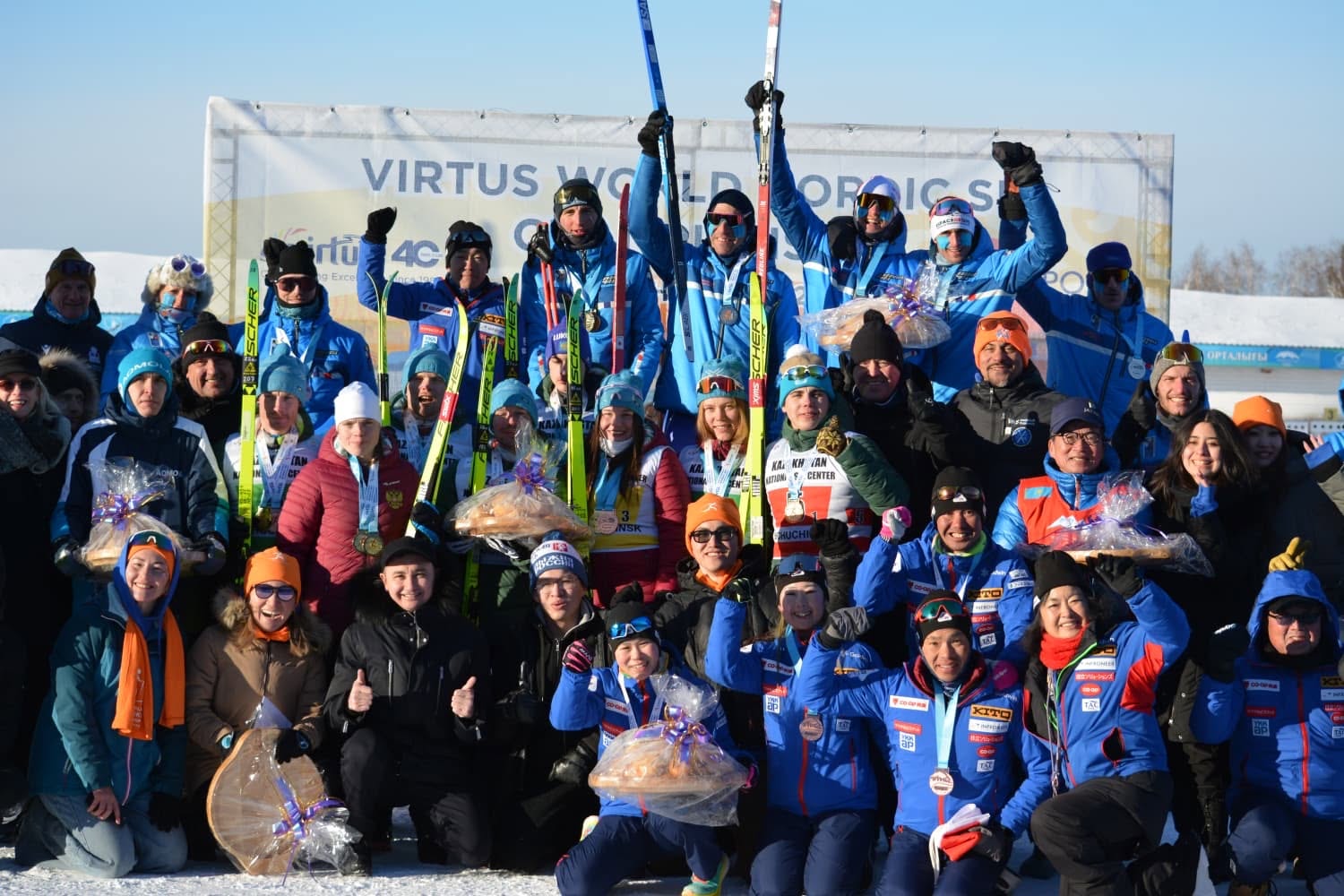
In 2025, the Virtus World Championships in alpine and Nordic skiing were held in the French Alps. These competitions demonstrated that it is possible to organize Adapted Sports events on slopes certified by the International Ski and Snowboard Federation (FIS) and in accordance with FIS regulations.
This sporting reality fuels discussions about the possibility of reintegrating Adapted Sports into the Winter Paralympic Games.
Support that has gradually expanded
During this first year, the issue of the role of athletes with intellectual disabilities in major international competitions has also gained greater visibility.
The French Paralympic and Sports Committee (CPSF), members of Parliament, local and regional elected officials, sports figures, and private partners—including Malakoff Humanis—helped raise awareness of the initiative.
In November 2025, the issue was raised in the Senate during a committee meeting dedicated to the French sports movement and a hearing with the Olympic committees. French Senator Cédric Vial spoke on behalf of the Tribune and Adapted Sports.
A few months later, in March 2026, Edgar Grospiron, then president of the Organizing Committee for the Alpes 2030 Winter Olympic and Paralympic Games, told Le Figaro that the inclusion of athletes with intellectual disabilities “is part of the discussion.” A few days later, Ophélie David questioned him again on the subject live on France TV.
France Reaffirms Its Commitment to Inclusive Sports
On September 4, 2026, during the National Conference on Disability, President Emmanuel Macron called for “rehabilitating” the image of disability and highlighted the need for better representation of people with disabilities in sports competitions, with a particular focus on athletes with intellectual disabilities.
In his remarks, he also stated that France intends to advocate with the International Olympic Committee for greater representation of people with disabilities in major sporting competitions, particularly those with neurodevelopmental or intellectual developmental disorders, including people with Down syndrome.
These remarks help to place the issue of the inclusion of Adapted Sports athletes within a broader discussion on the representation of disability in elite sports.
Virtus and the FIS: A partnership already underway
The issue of classifications and eligibility for athletes with intellectual disabilities is a key challenge for their return to the Paralympic Games.
In 2012, international efforts regarding eligibility and classifications enabled athletes in Adapted Sports to return to the Summer Paralympic Games in London. The Winter Paralympic Games, however, have not yet seen this reintegration.
A shift is underway, however.
In July 2025, Virtus and the FIS signed a memorandum of understanding that calls for strengthening their technical cooperation and working toward the inclusion of athletes with intellectual disabilities in alpine and Nordic skiing disciplines, potentially as early as 2030.
In 2026, Virtus also received a grant from the International Paralympic Committee (IPC) to continue research on eligibility and classifications in several Virtus sports, notably in adapted para-Nordic skiing, led by the research department at KU Leuven.
A major next Step: Opening the door to adaptive skiers
One year after the launch of the statement, momentum is building. But an important step still lies ahead.
To enable Adaptive Sports skiers from around the world to compete in the 2030 Winter Paralympic Games, the International Ski and Snowboard Federation (FIS) is now a key player in the process.
Together with the IPC, it must, in particular, facilitate the creation of a new disability class for Adaptive Sports athletes in alpine and Nordic skiing events.
Cooperation between the FIS and Virtus has been formalized since 2025. A joint working group is focusing in particular on technical issues, competition rules, and classifications.
For the Inclusive 2030 Games Statement, the challenge in this second year of advocacy is therefore to accelerate this cooperation and move toward a decision regarding the reinstatement of Para-Ski athletes at the 2030 Winter Paralympic Games in the French Alps.
One year later: A message that goes beyond skiing
Above all, this first year shows that the issue extends far beyond a single sport.
Athletes with an intellectual disability—with or without an associated disability such as Down syndrome or an autism spectrum disorder—compete in international competitions across many sports.
Their return to the Winter Paralympic Games would mark a new milestone in the history of inclusion in sports.
The momentum is building. The athletes are ready. France is ready. International stakeholders are already working together.
As Sandrine Chaix points out, “We must now turn this momentum into a decision that will allow Adaptive Skiing athletes to return to the biggest stage in Paralympic winter sports as early as 2030.
Yes, we must make 2030 a new chapter in Paralympic history.”
One year after its launch, the “Inclusive 2030 Games” statement therefore intends to continue its advocacy with a simple conviction: the 2030 Winter Paralympic Games in the French Alps can become a new milestone in the history of inclusion in sports.
Following Paris 2024, which played a major role in changing perceptions of disability, “the 2030 Games offer France a new opportunity to convey a universal message: that of a sport where every athlete can find their place. That is the very essence of this movement we are championing,” Marc Truffaut.
Nearly 6,000 signatures have already helped make this voice heard around the world. The next step is now in the hands of international stakeholders in the skiing community and the Paralympic movement.
France has opened a door. Now we must open it wider to allow athletes in Adapted Sports to also reclaim their place on the Winter Paralympic stage.